
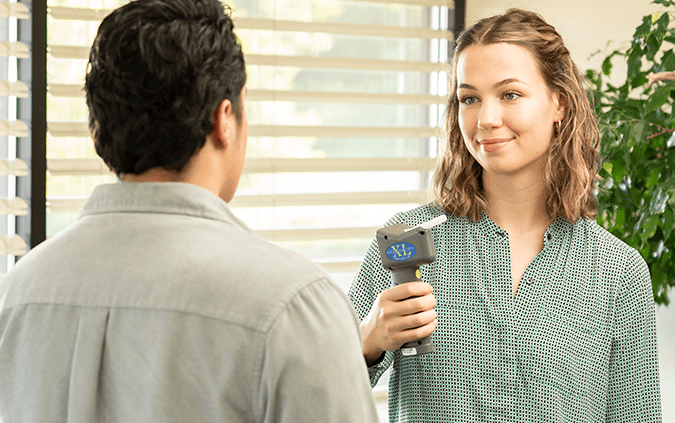
A breath alcohol technician (BAT) conducts workplace alcohol tests, guides employees through the testing process, documents and reports results. In DOT-regulated testing, a qualified BAT can perform breath alcohol screening and confirmation tests using the appropriate approved equipment.
For occupational health clinics, mobile testing businesses, and employers that conduct testing in-house, a trained BAT supports a reliable alcohol testing program. The role requires technical skills, sound judgment, and careful attention to federal procedures.
If you want to become a breath alcohol technician, the path begins with learning DOT requirements, mastering your testing instrument, and demonstrating that you can perform tests correctly. This guide explains what BAT certification means, what training involves, and how to get started with AlcoPro Breath Alcohol Technician training.
What Does a Breath Alcohol Technician Do?
A BAT helps protect the integrity of workplace alcohol testing. The job extends beyond asking someone to blow into a breathalyzer. Each test involves an employee, an instrument, required documentation, and a sequence of actions that must work together.
Typical responsibilities include preparing the testing area, explaining the testing process, operating the breath testing instrument, recording results, and communicating with the employer’s designated employer representative, or DER. The technician also needs to recognize situations that require additional steps.
For example, a screening result may require a confirmation test. An instrument problem may require taking equipment out of service. Incomplete paperwork may require correction before the testing record can support the employer’s next action.
Good BAT training connects these responsibilities. It helps technicians understand why a step matters and how their actions affect the reliability of the entire test.
What Does DOT BAT Certification Mean?
“BAT certification” commonly describes successful completion of a training program that documents a technician’s qualifications. However, DOT does not certify BATs or issue a federal BAT license. Technicians must meet the qualification requirements in 49 CFR Part 40 and keep documentation demonstrating compliance.
A completion certificate from a training provider is one of several documents that demonstrate a technician meets the qualification requirements. When evaluating a BAT course, look beyond the certificate itself: determine which regulatory instruction, instrument training, and practical demonstrations the program includes.
The distinction matters when advertising your testing services. Describe your qualifications accurately, and make sure your training records support your claims.
Who Should Take BAT Training?
BAT training serves people who will personally conduct workplace breath alcohol tests. Depending on the organization, that may include:
- Occupational health nurses and clinic employees.
- Mobile drug and alcohol testing providers.
- Employees of third-party testing businesses.
- Employer staff responsible for on-site alcohol testing.
- Entrepreneurs adding breath alcohol testing to a testing business.
A clinical background can help someone feel comfortable working with employees, but clinical experience does not replace learning DOT testing procedures. Similarly, experience collecting urine specimens does not establish proficiency in breath alcohol testing.
Employers should consider staffing coverage as well as individual qualifications. If one technician handles every alcohol test, vacations or turnover can interrupt service. Training additional staff can make it easier to maintain coverage and respond when testing needs arise.
For a new testing business, BAT training also supports decisions about equipment, supplies, and the services you can realistically deliver.
How to Become a Breath Alcohol Technician
Learn DOT Alcohol Testing Procedures
Start with the federal regulations governing the test. Qualification instruction must follow the DOT Model BAT Course or an equivalent curriculum. You must also stay current with DOT guidance and subscribe to ODAPC email updates.
Training should help you apply procedures during an actual appointment. Reading a rule and recognizing when to use it are different skills. Look for instruction that connects requirements to realistic employee interactions and testing scenarios.
Train on the Instrument You Will Use
DOT requires proficiency with the particular alcohol testing device you will operate. Choose your BAT training around that instrument.
For example, someone who will use an Alco-Sensor VXL/RBT VXL should select training for that system. Someone using an Alco-Sensor IV/RBT IV should select the corresponding course. Identify the model before enrolling so your training matches the device. If a business uses different models, the BAT is required to take proficiency training on each alcohol testing model used.
Complete Seven Consecutive Error-Free Mock Tests
Following qualification training, you must complete seven consecutive error-free mock alcohol tests on the device you will use. A qualified monitor must observe and evaluate your performance in real time and document successful completion.
These exercises let you demonstrate the entire process while an instructor can identify problems. Approach them as practice for employee testing, with the same attention to instructions, instrument operation, and documentation.
Keep Your Qualification Records
Maintain documentation showing that you meet DOT requirements and provide it when requested by authorized DOT representatives or a prospective employer and C/TPA clients.
The governing requirements appear in 49 CFR §40.213. DOT’s technician qualification guide also explains training and supporting records.
What Should BAT Training Cover?
A useful course prepares you for routine tests and situations that require specific responses. Along with knowing breath alcohol testing violations and prohibited conduct, your training should connect federal procedures with the practical operation of your instrument.
Screening and Confirmation Testing
A screening test determines whether confirmation is required. Under DOT rules, a screening result of 0.020 or higher requires a confirmation test. A result below 0.020 ends the testing process with the required documentation and confidential reporting.
When another technician or location will handle confirmation, the screening technician has additional responsibilities. These include providing waiting-period instructions, documenting them, and arranging an observed transfer. The employee must not drive to the confirmation site.
Training should help you plan that handoff before you encounter it. A clinic that provides screening only needs a workable confirmation arrangement, including communication between the technicians. Our article, “DOT Alcohol Testing Procedures: Screening, Confirmation and .020 Results” provides details on testing types and procedures.
The Waiting Period Before Confirmation
DOT requires an observed 15 minute wait period between completion of screening and confirmation. Confirmation should begin as soon as possible after that waiting period.
The waiting period helps prevent mouth alcohol from producing an artificially high test result. The employee receives specific instructions and must remain under observation by an authorized person.
If confirmation cannot begin within 30 minutes, the BAT must still proceed with confirmation and document the delay and its reason. Starting late does not automatically invalidate the tests, although it may constitute a regulatory violation.
Air Blanks and Test Documentation
Before a DOT confirmation test, the BAT performs an air blank in the employee’s presence and shows the reading. A reading above 0.00 requires another air blank; a second reading above 0.00 requires removing the instrument from service.
The technician also follows requirements for the mouthpiece, test number, displayed result, and printed record. When the instrument produces a separate printout, it must be attached to the Alcohol Testing Form using the specified tamper-evident method.
These details show why instrument proficiency and paperwork belong in the same training program. An accurate reading needs a properly documented testing record.
Accuracy Checks and Equipment Care
An accuracy check assesses whether the instrument’s reading falls within the required tolerance range against a known alcohol standard. A calibration adjustment, on the other hand, changes the instrument’s response when adjustment is needed.
DOT requires users to follow the manufacturer’s instructions and quality assurance plan, including external calibration checks at specified intervals. Equipment that fails an external check must come out of service until repaired and passing an external check.
Training should clarify accuracy check and calibration adjustment differences, who performs routine checks, who may make adjustments, how to perform checks or adjustments, and which records your organization must maintain.
Can You Complete BAT Training Online?
Yes. DOT permits proficiency evaluation through a method that provides real-time observation and interaction between the trainee and qualified monitor. Online instruction can therefore be part of the qualification process, with a live practical evaluation.
AlcoPro combines self-paced online regulatory and instrument instruction with seven mock alcohol tests conducted during a live Microsoft Teams session. Its instrument-specific courses support both first-time trainees and technicians returning for five-year refresher training.
For busy clinics and testing providers, this format offers a practical way to complete coursework around work responsibilities. You can work through lessons at your own pace, then prepare for the scheduled demonstration.
Before enrolling, confirm access to the correct instrument, required supplies, a suitable computer and internet connection, and someone who can participate as the test subject. Review your selected course’s preparation instructions before scheduling the live session.
How Long Does BAT Certification Last?
DOT requires refresher training at least every five years, including qualification instruction and proficiency demonstration. AlcoPro’s BAT training certificates reflect that five-year period.
Plan renewal early enough to complete coursework and mock testing before your qualification period ends. Keep renewal dates in a shared training calendar so supervisors can manage staffing coverage.
Your daily readiness also depends on practice. If you rarely conduct tests, review your procedures and equipment before an appointment. Familiarity can fade even while your training documentation remains current.
BAT vs STT and Specimen Collector
A screening test technician, or STT, conducts alcohol screening with an approved alcohol screening device. A BAT can conduct screening and perform confirmation testing using an approved evidential breath testing device.
A drug specimen collector performs a different function: collecting specimens for drug testing. That role has its own qualification requirements. A business offering both drug and alcohol testing should plan separate training for each service.
Think about the services your customers need before selecting courses. If you want to provide breath alcohol screening and confirmation, choose BAT training appropriate to your equipment. If you also want to offer drug specimen collection, add the relevant collector training.
Our article, “Breath and Saliva Alcohol Testing in Workplace Programs”, explains BAT and STT roles and unique training requirements.
Choose Your AlcoPro BAT Training Course
Start with the instrument you own or plan to use. AlcoPro offers dedicated online BAT training courses for different Alco-Sensor systems, allowing you to connect DOT instruction with your actual testing equipment.
| Your Instrument | AlcoPro Training Course |
| Alco-Sensor VXL/RBT VXL | View VXL/RBT VXL BAT training |
| Alco-Sensor IV/RBT IV | View IV/RBT IV BAT Training |
AlcoPro’s courses include interactive learning, instrument instruction, and instructor support. Optional Calibration Technician training is also available for technicians who need instruction in making calibration adjustments.
Compare the available training options carefully. A regulations-only course does not, by itself, complete the instrument proficiency and mock testing requirements for initial BAT qualification. Select the option that includes every component you need.
AlcoPro also offers classroom and on-site training for groups needing certification. Explore BAT training formats or call 800-227-9890 for help matching your staff, equipment, and training needs.
Frequently Asked Questions About BAT Certification
Do I Need a DOT-Issued BAT License?
DOT does not issue a BAT license. You qualify by meeting the applicable training and proficiency requirements and maintaining supporting records.
Do I Need to be Certified to Conduct a DOT Breath Alcohol Test?
DOT doesn’t certify BATs. However, training requirements outlined in the regulations must be met in order to conduct DOT testing. Your training provider should issue a training completion certificate as part of proof of completed qualification training.
What Should A BAT Training Certificate Show?
A BAT’s training certificate must show completion of qualification training covering 49 CFR Part 40 regulations for alcohol testing, the name of the student, the name of the EBT the BAT trained on, the completion of the 7 mock alcohol tests, the training completion date, the training company name, training instructor’s name, and the date the certificate expires.
Can I Use My BAT Qualification at Another Testing Location?
DOT explains that a technician’s qualification follows the individual rather than a particular collection site. You will need proficiency training if the device used at the new location is different than the device you initially trained on.
Can a BAT Conduct Both Screening and Confirmation Tests?
Yes, with the appropriate qualifications and equipment. DOT alcohol confirmation requires an approved evidential breath testing device. An STT performs screening only.
How Much Does BAT Training Cost?
Cost depends on the instrument course, training format, and selected options. Check AlcoPro’s current course pages and confirm whether your selection includes mock testing or optional calibration instruction.
What Should I Arrange Before My Online Mock Tests?
Review your course’s supply list, confirm instrument access, and arrange a test subject and working video connection. Preparing in advance helps keep the live session focused on demonstrating your skills.
Start Your BAT Training with AlcoPro
Becoming a breath alcohol technician gives you a practical role in workplace testing. The right training helps you understand the rules, operate your instrument, and guide employees through a documented testing process.
Choose the course for your Alco-Sensor instrument and select the training components you need. Explore AlcoPro BAT training and take your next step toward qualification.