
Understanding the official guidelines for DOT monitored specimen collections is one of the most practically important, and most frequently misapplied, areas of 49 CFR Part 40. One of the most common mistakes collectors make in DOT drug testing has nothing to do with specimen handling or chain of custody paperwork. It happens before the employee even enters the restroom: the collector uses the wrong procedure because they’ve confused a monitored specimen collection with a directly observed specimen collection. These are two separate procedures under 49 CFR Part 40 and treating them as interchangeable creates real compliance exposure.
The word “monitored” has a specific, narrow legal meaning in DOT drug testing. It refers to a procedure defined in § 40.69, and it is not a softer version of direct observation. Knowing what the official DOT monitored specimen collection guidelines actually require, versus what collectors often assume, is the difference between a clean chain of custody and a fatal flaw on the CCF. DOT specimen collector qualifications require training on exactly these distinctions, and collectors who complete proper certification walk away equipped to handle these scenarios without second-guessing themselves in the field.
This article breaks down what § 40.69 says, when it applies, who can monitor, what the monitor can and cannot do, and what the documentation requirements look like in practice. If any of this feels unfamiliar, that’s a signal worth acting on.
What are the official guidelines for DOT monitored specimen collections?
Two different procedures, two different triggers
49 CFR Part 40 contains two separate provisions for collections involving oversight. Section 40.67 governs directly observed collections. Section 40.69 governs monitored collections. These are not two points on the same spectrum; they are distinct procedures with different legal triggers, different observer responsibilities, and different levels of privacy intrusion for the employee.
In a directly observed collection, the observer must watch the urine leave the employee’s body and enter the collection container. In a monitored collection, the monitor must not watch the employee urinate. Conflating the two leads collectors to either over-supervise, violating the employee’s privacy protections under Part 40, or under-supervise, missing the procedural requirements of § 40.69 entirely. Getting this distinction right is foundational to compliant urine collections under Part 40.
Why oral fluid testing adds another layer
The May 2023 DOT oral fluid final rule (effective June 1, 2023), added important context here. Under Part 40, oral fluid collections are treated as direct observation collections by default. The monitored collection framework under § 40.69 therefore applies specifically to urine collections in certain facility situations, not to oral fluid. Once employers have access to oral fluid as a collection method and have implemented oral fluid as a part of their program, monitored urine collections procedures will not apply. Employers select one specimen type at the start of a testing event, and the applicable collection procedure follows from that choice.
The one situation that actually requires a monitored collection
Multi-stall restrooms and unsecured water sources
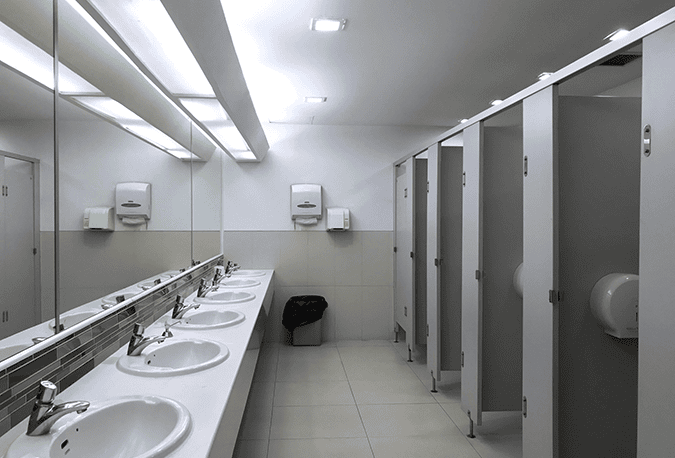
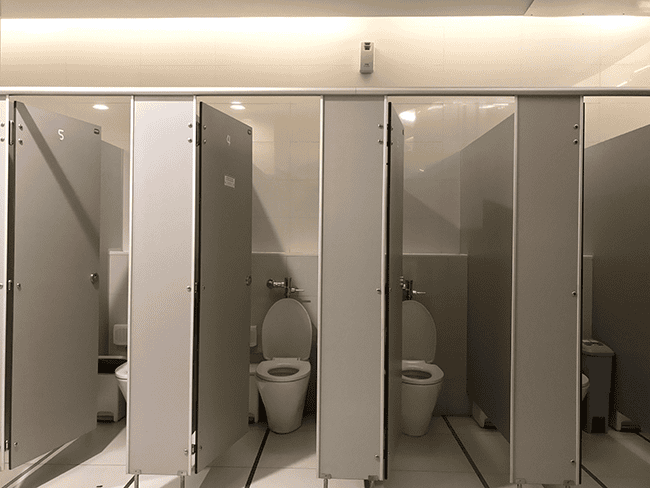
Part 40 is explicit about when a monitored collection is required: the urine collection is taking place in a multi-stall restroom, and the collector cannot secure all sources of water or remove trash cans where a donor could conceal a substituted specimen or adulteration device or other substances that could be used for adulteration or substitution. This is not a judgment call left to the collector’s discretion, and it is not triggered by suspicion of tampering. It is a facility-based requirement tied to a specific set of conditions.
What does “securing sources” mean in practice? It means either turning off, or blocking access to all water sources, sinks, toilets in unused stalls, and any containers that could be used to conceal a substitute or cheating method. If the collector can fully secure all water sources, a monitored collection is not required. A single-stall bathroom or a properly controlled collection site with secured water access sidesteps this requirement entirely. However, securing water sources in a multi-stall restroom is difficult and will likely require a monitored collection. Understanding the trigger prevents collectors from applying §40.69 in situations where it simply doesn’t belong.
When direct observation is required instead
Direct observation specimen collections under § 40.67 operates on a completely different set of triggers: a specimen temperature outside the acceptable range, suspected tampering observed during collection, return-to-duty tests, follow-up tests, and MRO-ordered observed recollections. If any of these situations apply, the collector is not in § 40.69 territory. The required procedure is a directly observed collection, which carries a fundamentally different set of steps, including visual observation of urination. Read the article, “Observed Collection Procedures for DOT Direct Observation” to know how to follow these unique procedures.
One scenario worth flagging: if a collection begins as a standard collection and the collector then observes conduct suggesting tampering, the collector must immediately conduct a new collection under direct observation. This mid-event switch from one procedure to another requires collectors to act without hesitation, and to know precisely which procedure they’re shifting into.
Who can serve as the monitor in a monitored collection and what the same-gender rule requires
The same-gender requirement and its exception
Under § 40.69, the monitor must be the same gender as the employee. This rule is firm. It applies regardless of whether the monitor is the collector or a different person brought in specifically for that role. The one exception: a licensed or certified medical professional may serve as the monitor regardless of gender, provided they hold licensure or certification in the jurisdiction where the collection occurs. DOT specifically identifies examples such as a nurse, doctor, physician’s assistant, technologist, or technician as qualifying under this exception.
This rule exists to protect employee dignity and privacy during an already sensitive procedure. When the assigned collector is not the same gender as the employee, the collector must identify a same-gender person to serve as monitor before the collection begins, unless a qualifying medical professional is available. Planning for this scenario ahead of time is part of running a compliant collection site.
The monitor does not have to be a qualified collector
This is a point collectors consistently overlook. The person serving as the monitor is not required to hold DOT specimen collector qualifications. The collector may bring in another person to fulfill the monitoring role entirely. Accountability, however, does not transfer with the role. If the collector designates someone else as the monitor, the collector is responsible for instructing that person on the exact monitoring procedures under § 40.69 before the collection begins. The collector cannot hand off the role and walk away from responsibility for how it is executed.
Monitored collection requirements under § 40.69: what the procedure actually looks like
Securing the collection area before the employee enters
Before the employee enters the restroom, the collector must secure the area so that no one except the employee and the monitor can enter until the collection is complete. In a multi-stall restroom, this means physically blocking entry, confirming which stalls are available, and restricting access to additional water sources wherever possible. This step is a required precondition under Part 40, not an optional precaution a collector can skip when the facility makes it inconvenient. The collector must ensure a bluing agent is added to the toilet bowl to prevent the donor from using the water from the toilet bowl to dilute their specimen. The bluing agent must be added before each donor collection attempt.
What the monitor does (and critically, does not do) during a monitored collection
The monitor must not enter the stall or watch the employee urinate into the collection container. This single rule marks the sharpest legal distinction between a monitored collection and a directly observed one. The monitor’s role is to listen and observe for sounds or conduct suggesting the employee is attempting to adulterate or substitute the specimen. If the monitor hears or observes anything raising that concern, they must report it immediately, at which point the collector must conduct an additional collection under direct observation.
After the employee finishes and exits the enclosure, the monitor’s final responsibility is to ensure the specimen container goes directly from the employee to the collector without interruption. No side trips, no unobserved moments with the container. That continuity is part of protecting specimen integrity under the chain of custody requirements found throughout Part 40.
Documentation, chain of custody, and what a refusal means
Always record the monitor’s name on the CCF
If someone other than the collector served as the monitor, the collector must record that person’s name on the “Remarks” line at Step 2 of the Federal Drug Testing Custody and Control Form (CCF). This is a mandatory documentation requirement under Part 40. The CCF must reflect exactly who was present and in what role during the collection, and that information needs to be captured at the time of the event. Failure to record the monitor’s name will be flagged as a correctable flaw that will require the collector to follow a correction protocol.
Omissions on the CCF carry real weight in DOT audits and MRO reviews. Common problem areas include a missing monitor name and failure to mark the appropriate remarks when observation occurred. A collector who executes the monitored collection procedure correctly but fails to document the monitor’s name has introduced a compliance risk that didn’t need to exist. Getting the paperwork right is part of the job, not an afterthought.
Treating a refusal to be monitored as a refusal to test
Part 40 is explicit on this point: if an employee refuses to permit a monitored collection that is properly authorized under § 40.69, that refusal carries the same consequence as a refusal to test. The collector must document the refusal, notify the designated employer representative (DER), and follow the standard refusal-to-test protocol. The employee does not have the option to decline monitoring because they find the procedure uncomfortable or intrusive. When the conditions under § 40.69 apply, the monitored collection is required, and the employee’s cooperation is not optional.

Getting specimen collector training that prepares you for monitored collections
What DOT qualification training must cover on this topic
DOT requires that specimen collector qualification training cover all types of problem collections, including monitored collection scenarios, suspected tampering situations, and the procedural difference between § 40.67 and § 40.69. Per Part 40 subpart F, collectors must complete five consecutive error-free mock collections before they can work independently, and refresher training is required at least every five years. Training that glosses over monitored collection procedures leaves collectors unprepared for real-world sites where multi-stall restrooms are the norm, not the exception.
How AlcoPro’s certification program builds this competency
AlcoPro’s DOT Specimen Collector certification training covers monitored collection requirements as part of its full Part 40 curriculum, including problem collections, CCF documentation, and chain of custody procedures. Collectors who complete the program don’t just memorize rules; they work through the scenarios that actually show up at collection sites. AlcoPro backs the program with a Training Success Guarantee.
Putting it all together
The official guidelines for DOT monitored specimen collections under § 40.69 apply in one specific situation: a urine collection in a multi-stall restroom where water and adulteration sources cannot be fully secured. The procedure requires a same-gender monitor (with one narrow exception for licensed medical professionals), prohibits direct observation of urination, and carries specific documentation requirements on the CCF, including recording the monitor’s name in the Step 2 Remarks line. None of those requirements are optional, and none of them carry over to directly observed collections, which operate under an entirely different set of rules found in § 40.67.
Confusing these two procedures is a compliance risk that shows up in audits and MRO reviews. Getting it wrong can compromise a chain of custody that affects an employee’s livelihood and an employer’s regulatory standing. These are not abstract regulatory details; they are the mechanics of a process that has real consequences for real people.
If the official DOT monitored specimen collection guidelines covered here felt unfamiliar while reading this article, treat that as a reason to pursue or refresh your collector certification. Use the DOT’s Urine Specimen Collection Procedures Guidelines (available at transportation.gov) as your primary reference, and explore AlcoPro’s training resources if you want a structured program built specifically for collectors who need to stay current on all Part 40 collection types.