
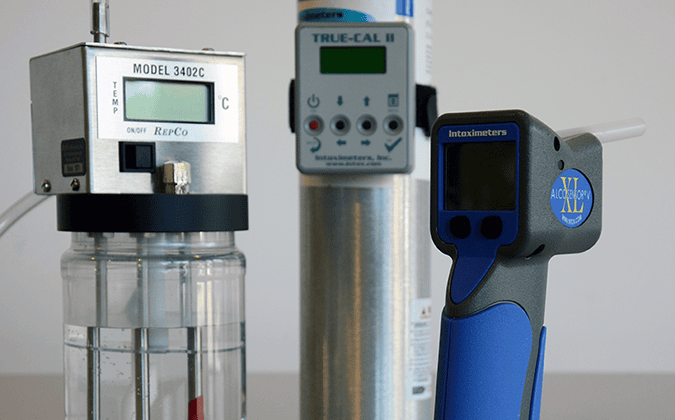
What happens if a breathalyzer is not calibrated correctly? The short answer: far more than a wrong number. A faulty BAC reading can end someone’s job, torpedo a criminal prosecution, or expose an employer to serious legal liability. The device looks like a simple gadget, but its output carries legal weight in courtrooms, disciplinary hearings, and federal compliance reviews.
Whether you’re a Designated Employer Representative (DER), an HR manager, a law enforcement officer, or a fleet safety coordinator, understanding how breathalyzer calibration errors cascade into much bigger problems is worth your time. This article covers what breaks technically, how far the numbers can drift, what courts have ruled, what employers risk, and what records matter most when a result gets challenged.
What actually breaks inside an uncalibrated breathalyzer
Calibration is what keeps a sensor’s output tied to a known, verified concentration of alcohol. When calibration drifts or fails, the gap between what the device reports and what is actually in someone’s breath widens in ways that aren’t always visible until it’s too late.
Sensor aging and drift
Fuel-cell sensors lose sensitivity over time, and the degradation is gradual. Independent testing estimates that a sensor can drift by roughly ±0.015% BAC over 90 days in an unmaintained handheld unit, though the exact range varies by device class, testing volumes, and test conditions. Because the change is slow, there’s no single moment when the device obviously fails; it just gets progressively less accurate, which is exactly why scheduled calibration intervals exist in the first place.
Environmental interference and zeroing errors
Technical data indicate that temperature alone can shift a fuel-cell reading by approximately ±0.002% BAC for every 1°C deviation from the calibration reference temperature, though effects vary by device design. High humidity causes semiconductor sensors to overreport. Condensation and an unstable power supply introduce additional error. The biggest acute risk, though, is zeroing the device in alcohol-contaminated air. A bad zero stores a false baseline that runs through every subsequent test that session, compounding the problem silently.
What happens if a breathalyzer is not calibrated correctly: how far the numbers drift
The 0.08% legal threshold is a precise line, not a rough estimate. An instrument that reads high or low by even 0.02 to 0.03% BAC can move someone from legally sober to legally impaired, or strip a legitimate DUI case of its evidentiary foundation.
The error margins that research documents
Mouth-alcohol contamination can temporarily push false readings above 0.10% on some devices. For this reason, workplace testing programs follow a two-step test procedure to rule out results influenced by residual mouth alcohol. In law enforcement testing, mouth alcohol is ruled out by observing an established wait period in advance of the test.
Properly maintained evidential instruments, by contrast, should stay within ±0.005 g/210L or ±5%, whichever is greater. The difference between a maintained program and a neglected one is not marginal; it’s the difference between a result that holds up in court and one that falls apart under scrutiny. Breath test accuracy, in other words, is only as reliable as the maintenance schedule behind it. Read our article, “Breathalyzer Calibration Matters: Tips for Ensuring Accuracy”.
Why “close enough” isn’t close enough in practice
Near a legal threshold, a small systematic bias is outcome-determinative. A reading of 0.09% that should be 0.07% doesn’t just affect a number. It determines guilt, employment status, and federal compliance standing. That’s not a rounding issue; that’s a life-altering breathalyzer calibration error built into the device itself.
When calibration failures throw out DUI cases
Courts don’t treat calibration errors as minor procedural hiccups. Depending on the jurisdiction and the nature of the defect, a miscalibrated breathalyzer can get results suppressed, charges reduced, or entire case archives reopened.
What recent U.S. courts have ruled
In August 2026, a Florida panel suppressed an Intoxilyzer 8000 result after finding that the work performed, replacing O-rings, swapping defective components, and recalibrating the machines, constituted repairs rather than routine maintenance. That work was performed by agencies not authorized under Florida rules to repair the devices. In State v. Kilburn (Fla. 2d DCA 2025), the court upheld exclusion of a breath test result after an FDLE inspector who was not an authorized repair facility replaced the machine’s breath tube. The strongest suppression arguments in Florida now combine unauthorized repairs with failed calibration records.
The Massachusetts case is the most sweeping example on record. The state Supreme Judicial Court ruled that Alcotest 9510 tests conducted between 2011 and 2019 involved systemic calibration and maintenance failures, including the intentional withholding of Intoxilyzer calibration logs and related records. The court created a conclusive presumption of misconduct for all affected defendants and excluded all results from that period in pending and future prosecutions. Roughly 27,000 defendants were allowed to withdraw pleas or seek new trials. That wasn’t a technicality; that was a program-level failure with consequences measured in tens of thousands of cases.
What courts look for before suppressing a result
Courts generally land in one of three places: suppression where a mandatory regulation is violated, exclusion across a date range for systemic failures, or admission with diminished weight. The strongest arguments combine failed calibration records, unauthorized repairs, and proof that the specific defect affected breath test accuracy. A general claim that a model is unreliable loses every time to documentation showing the particular unit failed a required check or was operated outside its approved protocol.
What employers and agencies risk when a breathalyzer is not calibrated correctly
Most breathalyzer calibration discussions center on criminal cases. The workplace consequences of an uncalibrated device are just as costly and far less understood, including wrongful-termination exposure and federal compliance audits that can follow employers for years.
Wrongful termination and HR liability exposure
A termination triggered by an unverified positive result can expose an employer to wrongful-termination or related litigation if the employer cannot produce supporting calibration and procedural records. The employer relied on bad data, acted on it, and now faces a discrimination or wrongful discharge lawsuit with no reliable evidence to stand on. The device looked functional. The number looked definitive. But if calibration records don’t back up that result, the entire disciplinary action unravels.
DOT compliance violations and the federal paper trail
Under 49 CFR Part 40, DOT mandates that evidential breath testing devices appear on NHTSA’s conforming products list, be operated by a certified Breath Alcohol Technician, and be maintained per the manufacturer’s quality assurance plan (QAP). If an EBT fails an external calibration check, it must be removed from service immediately until it is calibrated and passes an external calibration check. In the case of a failed check, any confirmed alcohol test result of 0.020 or higher obtained since the last valid calibration check must be cancelled under § 40.267. For Alco-Sensor evidential breath testing devices, the acceptable tolerance range of an external calibration check following a calibration maneuver tightens to +/- .003 BrAC from the known alcohol standard.
An out-of-calibration device used in a DOT-regulated test doesn’t just invalidate the test; it can trigger compliance audits and create liability for both the employer and the testing facility. Under § 40.333, records-retention requirements run two years for most documentation and up to five years for calibration records, and gaps in that paper trail carry real consequences during audits.
Employers regulated by the DOT must ensure all contracted service agents have received required training, are performing monthly calibration checks, and are following required device maintenance and record-keeping. Employers should periodically request documentation on these tasks from their testing service agents to ensure program compliance.
The records that decide whether a calibration error sticks
Whether you’re challenging a result or defending your testing program, the documentation is everything. Courts don’t suppress breathalyzer results based on a general argument that the device might have been off. They respond to specific records, or the documented absence of them.
The documentation checklist that matters most
Request records tied to the specific instrument, test date, location, and operator, covering at least the preceding 12 months. The key items include:
- Calibration and calibration check verification logs
- Reference-standard records: simulator solution or dry-gas cylinder certificates, lot numbers, expiration dates, and installation dates
- The full breath-test printout showing all attempts, aborted sequences, error messages, and timestamps
- Complete repair and service history, including parts replaced and software updates
- Operator certification and training records, including authorization for the specific device model
- Any failed accuracy checks that weren’t followed by documented corrective action
Records are often split across the instrument’s internal memory, agency paper files, state laboratory databases, and vendor service systems. A records request needs to specify all formats, including native electronic files, audit trails, and database exports, not just PDFs or photocopies.
What missing records actually signal
A gap in the calibration log doesn’t automatically invalidate a test result. But it shifts the burden. If the prosecution or employer can’t produce the required accuracy checks, reference-standard certificates, or operator authorization for the specific device model, the reliability of the result becomes genuinely arguable. That’s where suppression arguments and wrongful termination defenses gain real traction.
Staying ahead of calibration failures before they become a problem
The courts and the regulators don’t forgive retroactive fixes. The only reliable defense against a calibration-error disaster is a proactive maintenance schedule backed by proper documentation. Calibration intervals vary by device and jurisdiction, but the controlling rules are consistent in one respect: the interval must be documented, the procedure must follow the approved protocol, and the records must be retained. Testing program administrators must ensure device maintenance, calibrations, and repairs are properly carried out and documented in the event of an audit or court proceeding.
Calibration schedules in law enforcement testing
State rules, not generic guidance, set the legally controlling standard. Most states require calibration checks at least once every 30 days for instruments in use, including specific simulator-solution replacement rules. In law enforcement use, it is important to know your state’s requirements for the device used. Your program needs to be built around the specific rules for your jurisdiction and your device model.
Calibration schedules in workplace testing
Breathalyzers used in workplace testing, must follow the calibration check schedules outlined in the device manufacturers QAP. DOT regulations Part 40.233 defer to the manufacturer’s QAP for proper use and care of the EBT. According to the regulations, the QAP must specify the following:
- methods used to perform external calibration checks
- acceptable tolerance levels which the EBT is regarding as being in proper calibration
- external calibration check intervals, taking into consideration frequency of use, environmental conditions and type of operation
- inspection, maintenance and calibration requirements, intervals and record-keeping
The regulations clearly mandate that an EBT that fails an external calibration check must be removed from service and it cannot be used again for DOT alcohol testing until it is calibrated and passes an external calibration check.
Where professional calibration support fits in
For employers, law enforcement agencies, and testing facilities, partnering with a professional supplier matters. AlcoPro has been supporting alcohol testing programs across the U.S. for decades and is certified to offer repair, maintenance, and calibration services for Intoximeter Alco-Sensor devices. AlcoPro also stocks device supplies and DOT compliance resources to keep programs running and documentation current, which is exactly what auditors and courts want to see. Having a reliable service partner isn’t a convenience; it’s part of the compliance infrastructure.
The bottom line on breathalyzer calibration
If you’re still asking what happens if a breathalyzer is not calibrated correctly, here’s the direct answer: an uncalibrated breathalyzer is not a technicality. It’s the starting point of a chain that can run from a distorted BAC reading through a fired employee, a dismissed DUI case, a DOT compliance violation, or a civil lawsuit. Breath test reliability depends entirely on whether the device has been verified, maintained on schedule, operated by a certified technician, and documented at every step.
Make sure your calibration and documentation is iron clad with thorough maintenance records that include the serial number, the last verified accuracy check, the reference-standard documentation, and the operator’s certification for that specific device model. If you’re running a testing program, audit your maintenance schedule now. Review your calibration logs, confirm your reference standards are current, verify your operators are certified for your specific device, and make sure failed checks have documented corrective action. What plays out in courts and HR offices across the country when calibration fails is not a hypothetical. The fix is straightforward: treat calibration as the non-negotiable foundation it legally is.