
Drug testing has long played a critical role in workplace safety, compliance, and risk management. For decades, employers have relied on established methods such as urine, oral fluid, and hair testing to detect drug use. These methods are well understood, widely accepted, and supported by strong laboratory science.
However, as workplace expectations evolve, particularly surrounding marijuana use, so does the need for testing methods that provide more timely, relevant, and actionable information.
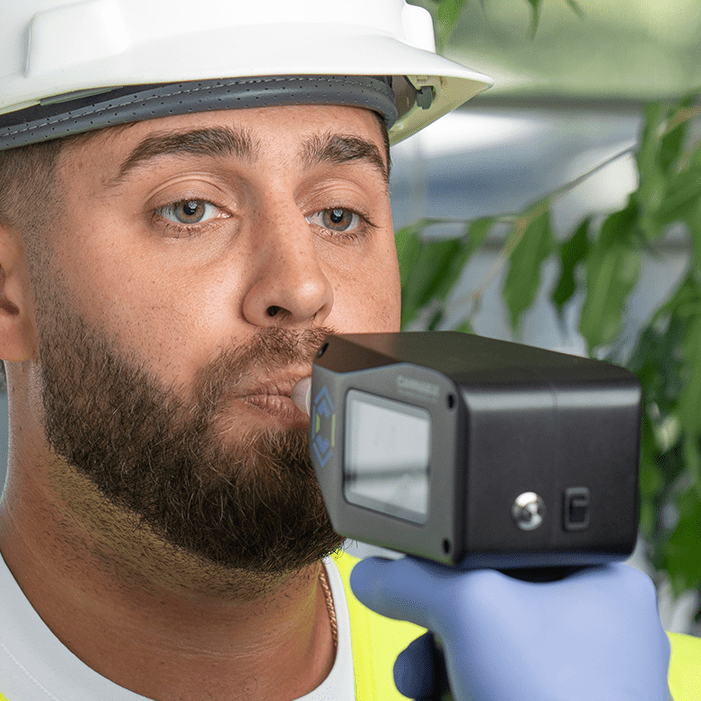
This is where breath drug testing is beginning to reshape the conversation. With the introduction of the Cannabix Marijuana Breath Collection Unit (BCU), combined with laboratory analysis performed by Omega Laboratories, organizations now have access to a modern solution designed to detect recent drug use, not just historical exposure. At the same time, many customers are asking important questions about how this technology works, whether it is accurate, and how it fits into existing programs.
This article provides those answers, while also offering the context needed to move forward with confidence.
Understanding the Difference: Picograms vs. Nanograms
One of the first differences people notice with breath testing is the unit of measurement. Traditional testing methods such as urine and oral fluid typically report results in nanograms per milliliter (ng/mL), while breath testing uses picograms per milliliter (pg/mL).
This difference is often misunderstood, but it is actually quite simple. One nanogram equals 1,000 picograms. Breath testing uses picograms because the concentrations of drugs, especially THC, in breath are extremely small. Measuring at the picogram level allows laboratories to accurately detect and quantify these low concentrations.
This is not a reduction in capability, it is an increase in sensitivity. It allows for a more refined measurement that aligns with the purpose of breath testing: identifying very recent drug use.
Why Breath Testing Focuses on Recent Use
Traditional drug testing methods are highly effective, but they are designed to detect past use over a broader window of time. Urine testing can detect marijuana use for days or even weeks, depending on usage patterns. Hair testing can reflect drug use over months. Oral fluid testing narrows the window, but still captures use beyond the immediate timeframe.
While this historical view is valuable, it does not always answer the most important question for employers: Is the individual at risk right now?
Breath testing is designed to address this gap. By detecting drugs at very low concentrations in breath, it provides a shorter and more targeted detection window, which is more closely aligned with recent use.
This is especially important for marijuana. Traditional methods can detect THC long after any impairing effects have worn off, making it difficult to distinguish between past use and potential on-the-job risk. Breath testing shifts the focus to what is recent and relevant, helping employers make more informed decisions.
Detection Window: A Targeted Advantage
It is true that breath testing has a shorter detection window than traditional methods, and that is precisely what makes it valuable.
Rather than capturing a long history of use, breath testing is designed to detect very recent consumption, often within a timeframe that is more meaningful for workplace safety. This allows employers to better align their testing programs with real-world risk, particularly in safety-sensitive environments.
Instead of asking whether an individual used marijuana days ago, breath testing helps answer whether use may be recent enough (within hours of use) to matter today.
Comparing Testing Methods
Here’s how breath testing stacks up against traditional methods:
| Method | Detection Window | Measurement | Key Strength |
| Urine | Days to weeks | ng/mL | Historical use |
| Oral Fluid | Hours to days | ng/mL | Recent use (broader window) |
| Hair | Up to 90 days | ng/mL | Long-term patterns |
| Breath | 15 minutes to 4 hours | pg/mL | Recent use detection |
Does Breath Testing Measure Impairment?
This is one of the most important, and most nuanced, questions. Breath testing does not directly measure impairment, just as urine, oral fluid, and hair testing do not. However, what breath testing does offer is a result that is more closely correlated with recent use, which is often a key factor in impairment.
In other words, while no drug test can definitively prove impairment on its own, breath testing provides a much more relevant indicator of potential risk compared to methods that detect use from days or weeks prior.
This distinction is important, and being clear about it helps build trust and credibility.
Accuracy and Scientific Validation
Any new technology must be backed by science, and breath testing is no exception. A major milestone occurred on March 3, 2026, when a peer-reviewed study published in the Journal of Analytical Toxicology validated the detection of THC in breath. This research demonstrated that THC can be reliably detected and measured in breath samples using advanced laboratory techniques.
This type of independent validation is critical. It confirms that breath testing is not just a promising concept, it is a scientifically supported method for detecting recent drug use.
Built on Proven Laboratory Science
Although breath testing introduces a new sample type, it relies on the same trusted analytical methods used in traditional drug testing. Samples collected using the Cannabix BCU are analyzed using LC/MS/MS (liquid chromatography–mass spectrometry), widely recognized as the gold standard in forensic toxicology.
This ensures a high level of accuracy, specificity, and sensitivity. Laboratories are able to precisely identify substances and measure them at extremely low concentrations, providing results that are both reliable and defensible.
Is Breath Testing Legally Defensible?
For many employers, this is one of the most important considerations. Breath testing is supported by several key elements that contribute to defensibility, including:
- Laboratory confirmation using LC/MS/MS
- Analysis performed by a SAMHSA-certified laboratory
- Review by a certified Medical Review Officer (MRO)
- Support from peer-reviewed scientific research
While marijuana breath testing is still an emerging technology, these components align with the same principles that underpin traditional drug testing programs, helping ensure results can withstand scrutiny.
The Role of Cannabix and Omega Laboratories
Confidence in any testing method comes from the organizations behind it. Cannabix has established itself as a leader in the development of marijuana breath testing technology. The Marijuana Breath Collection Unit (BCU) is designed to provide consistent, reliable sample collection while supporting laboratory confirmation.
Equally important is Omega Laboratories, which performs the analysis of breath samples. Omega is a SAMHSA-certified laboratory with decades of experience in oral fluid and hair testing. As a recognized leader in the drug testing industry, Omega brings a level of credibility and expertise that reinforces confidence in breath testing results. Together, this partnership combines innovation with proven laboratory excellence.
Built-In Safeguards: MRO Review
Breath testing programs follow the same best practices as traditional drug testing, including the use of Medical Review Officers.
When a laboratory result is positive, it is reviewed by a certified MRO to determine whether a legitimate medical explanation may exist. If a prescribed medication is identified as a contributing factor, the result can be verified as negative.
This process ensures fairness for employees while maintaining the integrity and credibility of the testing program.
How Breath Testing Fits Into Existing Programs
Breath testing is not intended to replace traditional testing methods entirely. Instead, it serves as a powerful complement. Many organizations are exploring breath testing as part of:
- Reasonable suspicion testing
- Post-incident testing
- Return-to-duty or follow-up programs
By adding breath testing to an existing program, employers can gain a more complete picture, combining the historical insight of urine or hair testing with the real-time relevance of breath testing.
What About DOT Compliance?
It is important to note that marijuana breath testing is not currently part of DOT-mandated testing programs. However, it can be used in non-DOT testing programs or as a supplemental tool within broader workplace policies. Being transparent about this distinction helps organizations make informed decisions while remaining compliant with applicable regulations.
Additional Benefits: Collection and Integrity
Beyond detection capabilities, breath testing also offers practical advantages in the collection process. Breath samples are collected in a controlled manner, reducing opportunities for tampering or adulteration. This addresses some of the common challenges associated with urine testing, such as substitution or dilution.
The collection process is also straightforward and efficient, helping minimize disruptions to daily operations while maintaining a high level of integrity.
Expanding Beyond Marijuana
While much of the focus has been on THC, breath testing technology is also being used for the detection of other substances, including cocaine and opioids. This expands the potential value of breath testing as part of a broader drug testing strategy. This is true for the Cannabix BCU. Employers can not only use the unit for the detection of recent THC use, but for other substances as well.
A Modern Approach for Today’s Workplace
As marijuana laws continue to evolve, employers are faced with new challenges in balancing safety, compliance, and fairness. Traditional testing methods remain important, but they do not always provide the level of immediacy needed for today’s workplace.
Breath testing offers a modern approach, one that focuses on recent use, improved relevance, and enhanced decision-making.
Although the technology is relatively new, it is supported by peer-reviewed research, advanced laboratory methods, and experienced professionals. The combination of Cannabix’s innovation and Omega Laboratories’ expertise provides a strong foundation for confidence.
Take the Next Step
Breath testing represents a meaningful advancement in drug testing. By leveraging highly sensitive measurement at the picogram level and focusing on recent use, it offers a level of precision that complements traditional methods and addresses a critical gap in workplace safety.
With the Cannabix Marijuana Breath Collection Unit and laboratory analysis from Omega Laboratories, organizations now have access to a solution that is both innovative and grounded in proven science.
If you are ready to explore how breath testing can enhance your program, we’re here to help. Contact us today to learn more, ask questions, and discover how this technology can support your organization with confidence.