
For years, the “holy grail” of drug testing has been a reliable way to distinguish between someone who consumed cannabis days ago and someone who is currently under the influence. Traditional methods like urine and hair testing excel at detecting historical use, but they often fail to pinpoint the critical 4-hour window associated with peak impairment.
On March 3, 2026, a major scientific milestone was reached. The Journal of Analytical Toxicology (JAT) published a peer-reviewed validation study confirming the accuracy of a new breath-based testing method. This study, a collaboration between Cannabix Technologies Inc. and Omega Laboratories Inc., marks a turning point for workplace safety and law enforcement.
Why Breath Testing is a Game-Changer for 2026
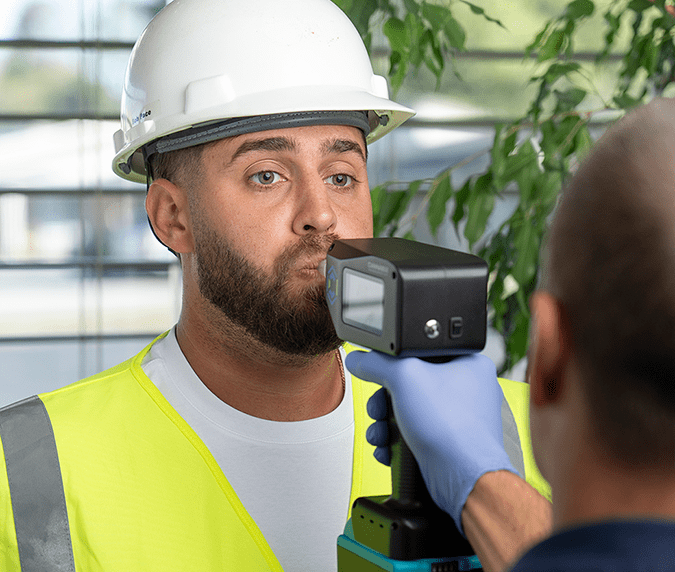
As more regions expand medical and recreational marijuana access, the need to identify recent use has become critical. Breath testing offers a sophisticated alternative to invasive blood draws or intrusive urine samples. The Cannabix Marijuana Breath Collection Unit (BCU), is a proven method for testing breath for recent THC use.
Key Findings from the JAT Study:
- Multi-Cannabinoid Detection: The method simultaneously quantifies Delta-9 THC, Delta-8 THC, CBD, and CBN in breath aerosols.
- Proven Recency: The study confirms that THC concentrations in breath correlate with blood metabolism, specifically identifying use within 15 minutes to 4 hours prior to collection.
- Sample Stability: Collected breath samples remain stable for up to 7 days when stored in the Cannabix Breath Collection Kit, allowing for reliable transport to the lab.
- Rigorous Validation: The method was validated according to ANSI/ASB Standard 036 guidelines, ensuring it meets the highest forensic standards.
How the Cannabix Breath Collection Unit (BCU) Works
The Cannabix BCU is a portable, non-invasive tool designed to collect samples regardless of a subject’s lung function. To ensure accuracy and prevent “false positives” from environmental factors, the system uses a multi-step process:
- Ambient Air Sample: First, the device collects a sample of the surrounding air to rule out external contamination.
- A & B Samples: Two breath samples are collected simultaneously.
- Laboratory Analysis: These samples are sent to Omega Laboratories, where they are tested using high-precision LC-MS/MS technology.”This new publication reinforces the effectiveness of using breath to detect recent drug use.
“This achievement further demonstrates our expertise in forensic toxicology and our commitment to providing advanced testing solutions.” — Bill Corl, CEO of Omega Laboratories.
Bridging the Gap in Workplace and Roadside Safety
For industries where safety is paramount—such as transportation, construction, and healthcare—this technology fills a “critical gap”. Employers no longer have to rely on tests that flag off-duty use from the previous weekend. Instead, they can focus on same-day THC usage, protecting both the workforce and public safety.
Furthermore, the robustness of the cartridges and the 7-day stability window make this a commercially viable solution for remote worksites or roadside stops where immediate laboratory access isn’t possible.
Conclusion
The peer-reviewed validation in the Journal of Analytical Toxicology isn’t just a win for Cannabix and Omega—it’s a win for scientific transparency and public safety. By providing a non-invasive, accurate, and forensic-grade tool for detecting recent cannabis use, this partnership is setting a new global standard for the industry.