
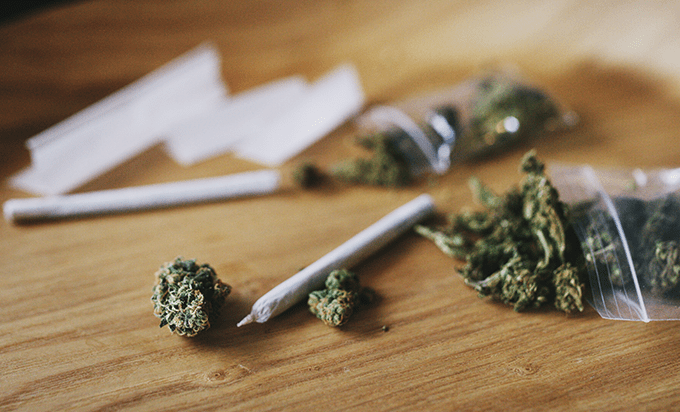
Cannabis legalization has created a paradox for HR and safety leaders: something can be legal outside of work—and still unacceptable inside it.
If that sounds contradictory, it is. And that’s exactly why many workplace policies surrounding testing for THC are struggling to keep up while maintaining a safe work environment.
For mid-market and enterprise organizations, especially in manufacturing, construction, logistics, and other safety-sensitive environments. Employers are balancing:
- Employee rights and evolving state laws
- Federal compliance obligations
- Workplace safety and liability exposure
- And increasingly, the limitations of traditional drug testing
This guide cuts through the noise. It’s not about trends, it’s about what holds up under scrutiny.
The Legal Reality: “Legal” Doesn’t Mean “Allowed”
Let’s start with the most common misconception: If cannabis is legal in a state, employees can use it without consequence. That is not universally true, especially in the workplace.
Federal vs. State: The Core Tension
Over half of U.S. states have legalized cannabis in some form (Recreation, Medicinal or both). But for now, federal law still treats marijuana as a controlled substance (with potential rescheduling still in progress).
For businesses with employees who fall under regulated and non-regulated testing categories, this creates two very different compliance tracks:
DOT-Regulated Employers (Non-Negotiable)
For employees in safety-sensitive positions regulated under DOT authority, marijuana use is strictly prohibited, regardless of state laws. Testing requirements in this sphere remain unchanged, even with rescheduling discussions. Testing positive for THC is considered DOT prohibited conduct. Simply put, THC use isn’t allowed. Employees in violation are automatically removed from safety-sensitive duties and must undergo an evaluation by a Substance Abuse Treatment Professional and the “return to duty” process.
Non-Regulated Employers (More Nuanced)
For manufacturing, construction, and other non-DOT workplaces, state laws increasingly restrict what you can test for and when and how you can test. Some states limit pre-employment testing for cannabis. Other states prohibit testing for THC, regardless of why. Others require evidence of impairment, and not historical use or presence. This is where HR decisions become more complex—and riskier. Reclassifying THC from a Schedule 1 narcotic will also impact non-regulated employee testing guidelines.
The Real Problem: Testing Doesn’t Equal Impairment
Here’s where many workplace testing policies quietly break down. Traditional drug testing methods, especially urine, were never designed to detect recent use or impairment. THC metabolites can remain detectable in a urine sample for weeks and up to 1 month or longer. These same metabolites can remain detectable in an oral fluid or saliva sample for up to 24 to 48 hours. A positive result obtained from either of these testing methods does not prove impairment at work — only historical use.
This creates two fundamental issues:
- Employers are left with no testing for THC altogether. Policies void of testing for THC arguably creates an environment where usage can find its way into the workplace.
- Employers have no way to determine recent THC use and impairment, which compromises workplace safety and makes discipline impossible or ineffective.
These issues lead to legal challenges, employee disputes, and policy confusion across HR teams. And it’s why many organizations are rethinking their approach.
The Shift Toward Impairment-Based Thinking
Forward-looking organizations are moving away from “presence” toward impairment and fitness-for-duty. This includes two emerging approaches.
Cognitive and Motor Impairment Detection Tools
Cognitive and Motor Impairment Detection uses neuroscience in form of an App. This allows employers to determine an employee’s overall fitness for duty by analyzing reaction times, coordination, and cognitive performance metrics. This technology doesn’t identify the use of a substance—but identifies impairment itself, which may be caused by fatigue, drugs, alcohol, illness or mental distress. Using neuroscience to gauge cognitive and motor impairment is less invasive than biological testing, accepting of other environmental causes to impairment, and is a legally acceptable method to prove fitness for duty.
In fact, impairment detection is gaining traction because it directly addresses what traditional tests cannot.
Cannabis Breath Testing (The Emerging Frontier)
Unlike urine or saliva tests, cannabis breath testing aims to detect very recent THC use, typically within a few hours. When used as a tool in reasonable suspicion or reasonable cause situations or post-accident testing, employers can structure sound testing policies with defined and legally defensible consequences. Just knowing an employer possesses the ability to test for recent THC use, becomes a strong deterrent in keeping marijuana use out of the workplace.
What It Promises
- Detection of recent consumption, not historical use
- A closer proxy for potential impairment window
- Forensically acceptable and accurate results
What It Doesn’t Yet Fully Solve
- No immediate THC impairment threshold like a traditional alcohol breathalyzer
- Captured breath samples are analyzed in a lab and made known to the employer within 48-72 hours of the test
- Must be used alongside policy, not as a standalone decision-maker
Testing Impacts on the Labor Pool
When organizations rely on testing methods that detect historical THC use rather than recent impairment, they often shrink their available labor pool without improving workplace safety. In legalized states, this tension shows up quickly in hiring metrics. Marijuana positivity rates are consistently higher in states where cannabis is legal, reaching about 5.8% vs. 3.3% in non-legal states, meaning a larger portion of otherwise qualified candidates fail pre-employment screens based on past, off-duty use. At the same time, employers report that drug testing itself has become a “significant barrier to hiring,” limiting talent pools and increasing turnover, particularly as legalization expands. In response, many companies, including major employers, have reduced or eliminated cannabis testing for non-safety roles simply to remain competitive in a tight labor market.
This creates a paradox: employers are disqualifying workers for legal, off-duty behavior that may have no bearing on current impairment—while simultaneously struggling to fill critical roles. For HR and safety leaders, this is the operational consequence of relying on historical-use testing: you may be enforcing policy, but you’re also disqualifying a growing percentage of the workforce without necessarily identifying who is actually impaired on the job.
Building a Defensible Cannabis Policy (That Actually Works)
A more defensible approach to crafting a cannabis policy in a non-regulated industry includes:
1. Define “Impairment” Clearly:
Don’t rely solely on test results. Your policy should include observable THC signs, symptoms and behaviors; clear supervisor documentation and incident context.
2. Align Testing Method to Purpose
| Testing Context | Best Fit Approach |
| Pre-employment | Urine or oral fluid; or remove THC |
| Random | Depends on role risk level |
| Post-Accident | Combine methods (urine + breath/behavioral) |
| Reasonable Suspicion | Combine supervisor observations + breath |
| Return-to-duty and Follow-Up | Structure + compliance-driven approach |
3. Train Supervisors (This Is Critical)
Reasonable suspicion testing is only as strong as documentation quality, consistency of program execution and the training your supervisors receive. Poor documentation and failure to correctly observe the signs and symptoms can undermine even valid test results.
4. Separate Policy by Role Type
- Safety-sensitive roles → stricter controls
- Non-safety roles → more flexibility
- This is especially important in states with employee protections.
The Road Ahead: Expect More Change, Not Less
Cannabis policy is not stabilizing—it’s accelerating. Policy makers and enforcers should watch for:
- Continued state-level employee protections
- Potential federal rescheduling impacts (but slow change in workplace rules)
- Growth in impairment-based testing expectations
- Increased scrutiny of disciplinary decisions tied to THC results
- The shift from “Did they use?” to “Were they impaired?”
Final Thought
HR leaders don’t need perfect certainty—but they do need defensibility. Right now, the biggest risk isn’t cannabis legalization itself. It’s using outdated testing logic in a modern legal environment. Organizations that get this right will protect workplace safety, respect employee rights, and avoid becoming the next legal case study.