
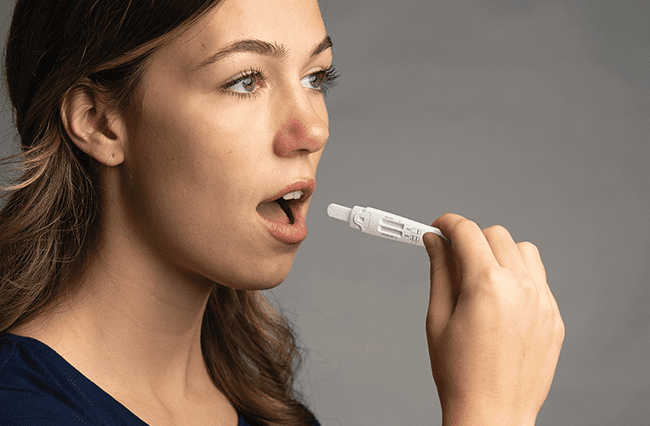
For employers and other companies such as healthcare clinics, choosing the right drug testing method often comes down to speed, convenience, and the reason for testing. Whether you are managing a workplace drug and alcohol testing program, handling post-accident testing, or conducting pre-employment screening on behalf of the employer, understanding the differences between rapid urine test kits and saliva drug test kits can help you choose the right solution.
Both methods have advantages. The best choice depends on your testing goals, timing, and program requirements.
Understanding the Two Testing Approaches
Drug testing usually falls into two categories: rapid or instant testing and laboratory-based testing. Rapid urine and rapid oral fluid test kits provide preliminary screening results within minutes. If the result is non-negative or inconclusive, the same sample may often be sent to a laboratory for confirmation testing, depending on the collection device used.
Laboratory-based testing works differently. In this process, the urine or oral fluid sample is collected and immediately sent to the lab for screening and confirmation analysis. This method usually takes longer but provides a fully documented lab result – screening and confirmation test results.
For many employers, rapid testing is useful when quick preliminary answers are needed. Lab-based testing often makes sense when timing is less urgent. However, employers may use one or the other or a combination of the two.
Why Urine Testing Remains Common
Urine testing has long been the most widely used method in workplace testing programs, especially for pre-employment screening. One reason is cost. In many cases, urine drug test collection kits are provided at no additional charge when lab screening and confirmation testing are ordered. This makes urine testing a practical option for routine testing programs.
Urine testing also offers flexibility. It works well for both rapid screening and traditional laboratory testing. For pre-employment situations, where immediate results are usually not necessary, a lab-based urine collection is often a good fit.
Another advantage is storage and handling. Urine collection kits generally do not require the same controlled temperature and humidity conditions as oral fluid devices. They also typically do not carry the same expiration-related concerns.
Limitations of Urine Testing
Urine testing does have drawbacks. Privacy is one of the biggest considerations. A urine collection usually requires restroom access and a designated private collection area. That can make on-site collections more difficult in some environments. Not many enjoy using a porta-potty – where that may be the only option at the time of the urine collection.
Urine collections are generally not observed except in limited circumstances, such as some DOT collections involving temperature issues or suspected tampering. Because of this, urine testing can present a greater risk of adulteration or substitution. For situations involving very recent drug use, urine may also be less useful than oral fluid.
Why Saliva Testing Is Growing
Saliva (oral fluid) drug test kits have become increasingly popular because of their convenience and their ability to better detect recent drug use, especially recent THC use. This is one reason oral fluid testing has been approved for DOT testing, although DOT testing has not yet fully moved forward with oral fluid collections because a second certified HHS laboratory is still needed.
Oral fluid testing offers several practical benefits. Collections are directly observed, which helps reduce cheating, substitution, and adulteration concerns. Another major advantage is convenience. Oral fluid collections do not require restroom privacy. They can often be performed almost anywhere, which can be especially helpful for mobile collections, urgent care settings, clinics, and workplace incidents.
For some donors, oral fluid collection may also feel less uncomfortable. In certain situations, it can be easier than providing a urine sample and may create a better overall testing experience.
Limitations of Oral Fluid Testing
Oral fluid testing also has limitations. The collection device itself adds cost. Unlike many urine lab collection kits, oral fluid devices are not typically included at no charge. Oral fluid kits also have an expiration date and generally have controlled temperature and humidity storage requirements.
Timing can also be a factor. Most oral fluid collections require about a 10-minute wait period before collection, which can slow the process slightly. For employers focused mainly on pre-employment testing, oral fluid may not always be the most cost-effective choice.
Which Test Method Is Better?
There is no single best answer. It depends on why you are testing. For pre-employment testing, a lab-based urine collection is often a practical and cost-effective choice when immediate results are not necessary. For post-accident, reasonable suspicion, or other time-sensitive situations, rapid urine or saliva/oral fluid drug test kits may be better options because they provide fast preliminary results.
Many employers use both. For example, some choose urine testing for routine screening and oral fluid testing for situations involving recent-use concerns, shy bladder issues, or collections where privacy is difficult.
Making the Right Decision for Your Program
Both urine and oral fluid testing offer real advantages. Urine testing often provides lower cost and long-standing familiarity. Oral fluid testing offers convenience, observed collections, and better detection of very recent use.
The right testing method depends on your program goals, collection environment, and how quickly you need results.
If you need help comparing and deciding upon a rapid urine or saliva test kit that fits your workplace or clinic, contact us. We can help you choose the right testing solution for your needs.