

Urine sample tampering prevention starts with one non-negotiable truth: the sample in the cup must be real. That’s the whole premise of urine drug testing. When the sample isn’t real, the test isn’t just inaccurate, it’s useless. You’ve done the paperwork, paid for the lab, and still have no idea whether that employee has violated your company’s substance abuse policy.
Tampering occurs frequently enough to be a practical concern in any program. The methods have gotten smarter: commercially available synthetic urine products are sold openly and marketed specifically to beat workplace drug screens. Adulterant products target the chemistry of the test itself. Some donors prepare deliberately to defeat your controls. The threat is real, and it’s not going away.
At AlcoPro, we’ve been supplying drug and alcohol testing programs since 1982. Over four decades, we’ve seen what works and what doesn’t. What follows isn’t theoretical; it’s a layered, practical protocol covering how cheating happens, how to catch it in the room, how to confirm it chemically, and how to document everything so your results hold up. Apply all of it consistently, and you’ll have a program that’s genuinely hard to beat.
The Three Ways People Cheat on Urine Drug Tests
Before you can defend against tampering, you need to understand what you’re defending against. There are three core methods, and each requires a different countermeasure.
Substitution: The Complete Swap
Substitution means replacing the donor’s actual urine with clean urine from another person or with commercially available synthetic urine. Synthetic urine products are widely sold, specifically marketed to pass drug screens, and formulated to mimic the basic chemical profile of real urine. This is the hardest method to catch without physical controls in place, because the sample looks legitimate on paper until you check temperature or run validity markers. Without active specimen collection controls, substitution can go undetected entirely.
Dilution: The Numbers Game
Dilution works by reducing the concentration of drug metabolites below the detection cutoff. Donors do this in two ways: drinking excessive fluids before the collection to dilute their own urine, or by adding water to the collected sample directly in the collection room. A dilute result shows up as very pale, water-like urine with low creatinine and low specific gravity. Many programs make the mistake of dismissing a low-positive dilute result as inconclusive. A dilute result can still carry meaningful information and should be evaluated carefully, not automatically discarded.
Adulteration: The Chemical Interference
Adulteration involves introducing a chemical substance into the collected sample to destroy drug metabolites or interfere with the immunoassay chemistry. Donors smuggle in household chemicals like bleach or vinegar, or use commercial adulterant products such as Klear, Urine Luck, or Stealth, which are based on nitrite salts, pyridinium chlorochromate, or peroxide compounds. Unlike dilution, adulteration doesn’t target drug concentration; it attacks the test itself. Giveaways include an unusual chemical odor, excessive foaming from surfactants, or visible turbidity in the sample.
Red Flags You Can Catch Right in the Collection Room
Many tampering attempts can be identified before a single lab result comes back. Collectors who know what to look for have a significant advantage at the point of collection.
Temperature: The Most Reliable First Indicator
Fresh urine leaves the body at body temperature. The acceptable range under federal guidelines is 90 to 100°F (32.5 to 37.7°C), and collectors must check temperature within four minutes of collection. Anything outside that window is a red flag that warrants immediate attention and in the case of a DOT drug test, will automatically trigger a second specimen collection using direct observation procedures. A cold or ambient-temperature sample is the most common indicator of substitution. Synthetic or stored clean urine won’t hold body temperature, and that gap is what catches it. Temperature is your fastest, cheapest, and most reliable first screen. For specimens collected during a non-DOT test, self-adhering temperature strips placed on the outside of the collection cup are the best bet for checking the specimen’s temperature.
Visual Inspection: What Abnormal Looks Like
Legitimate urine has a predictable appearance: yellow-tinged, mostly clear, and without foam or unusual odor. Tampered samples often don’t look right. A specimen that’s completely colorless may indicate heavy dilution. Excessive foaming points to detergents or surfactant-based adulterants. Any sharp chemical odor, bleach, vinegar, or something unidentifiable, is a direct signal that something was added. Turbidity, unusual coloration, or any off appearance warrants documentation and may justify proceeding to an observed collection. Train your collectors to trust their observations. A strange-looking sample is worth questioning every time.
Specimen Validity Testing for Urine Sample Tampering Prevention
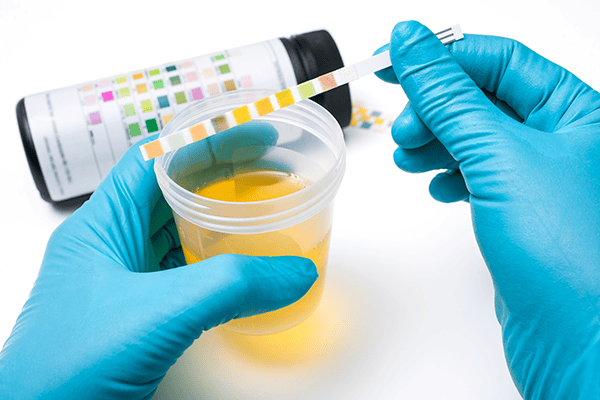
After the physical check, specimen validity testing (SVT) provides a chemical layer of confirmation. Understanding what each marker catches, and what its limits are, will help you use SVT correctly rather than over-rely on it. Specimens collected for DOT testing undergo validity testing at the lab. A non-DOT collection may use instant validity test strips that analyze the specimen for these major properties.
What Creatinine and Specific Gravity Reveal
Creatinine is a metabolic waste product present in all human urine. Under the 2024 HHS/SAMHSA Mandatory Guidelines, a specimen with creatinine greater than 5 mg/dL and less than 20 mg/dL, combined with a specific gravity between 1.002 and less than 1.003, is reported as dilute. When creatinine drops below 2 mg/dL and specific gravity is at or below 1.0010 or at or above 1.0200, the result falls outside the physiologically producible range for human urine; that’s a substituted specimen. Both markers must be used together, not in isolation, because physiologic variation can affect either one independently.
pH and Oxidant Strips
pH testing catches acid or base adulteration. Normal urine pH runs from roughly 4.5 to 9.0, and anything below 4 or above 11 is flagged as adulterated under SAMHSA guidelines. Oxidant strips detect a broader range of chemical adulterants: nitrites, bleach, chromate, permanganate, and peroxide-based products. Nitrite levels at or above 500 mcg/mL are the standard adulteration threshold; levels between 200 and 500 mcg/mL may trigger an invalid result designation requiring recollection. Different strips from different manufacturers vary in sensitivity and detection chemistry, so results should be interpreted using your program’s specific regulatory criteria.
Honest Limitations Collectors Need to Understand
No SVT panel catches everything. Some commercial adulterant products are specifically formulated to evade routine creatinine, specific gravity, pH, and oxidant screening. Standardization across manufacturers is inconsistent, and strips calibrated to different thresholds may give conflicting readings on the same specimen. SVT confirms suspicion and provides chemical documentation; it does not replace physical controls in the collection room. Treat it as a safety net, not a primary defense. The sections that follow are where the primary defense lives.
Securing the Collection Site: The First Line of Defense
SVT testing catches tampering after it happens. Securing the collections site, collected specimens and supplies are the best steps to prevent it in the first place.
49 CFR Part 40.43 provides specimen collectors and collection site administrators with specific steps to take to secure the collection site and protect the integrity of the collected specimen. A few of these steps include securing all water sources, using a bluing agent in the toilet, removing soap and cleaning agents from the restroom and removing trashcans and other potential places where a donor may conceal a fake specimen. For collection sites conducting DOT testing, these steps aren’t a recommendation, they’re a requirement and must be performed before every specimen collection.
Blue Dye Tablets: Simple, Inexpensive, and Effective Against Substitution
Blue dye anti-tampering tablets are dropped into the toilet bowl before collection begins, turning the water a visible blue color. If a donor attempts to use toilet water to dilute the sample or as a substitute specimen, the blue tint makes the attempt immediately obvious to the collector. This is one of the lowest-cost, highest-return physical controls available, no equipment, no overhead, and no ambiguity.
AlcoPro carries blue dye anti-tampering tablets that are straightforward to use and compatible with standard collection room setups. Bluing agents or Blue Dye tablets are a DOT requirement before each collection attempt. If your collection sites aren’t using them, that’s a gap worth closing before the next test cycle.
Tamper-Evident Seals and Packaging
Tamper-evident collection cups and security seals serve two functions: they deter post-collection tampering, and they create a physical record of handling integrity. Serialized security seals that show visible damage if broken or disturbed confirm that the specimen hasn’t been accessed between the collection site and the lab.
At the point of handoff, collectors should verify seal integrity and confirm the specimen ID numbers on the seals and on the chain-of-custody form match. A broken or missing seal at the lab or unmatched serial numbers on the seals and form is a chain-of-custody failure, one that can undermine an otherwise valid result.
Chain of Custody: The Paper Trail That Holds Your Results Up
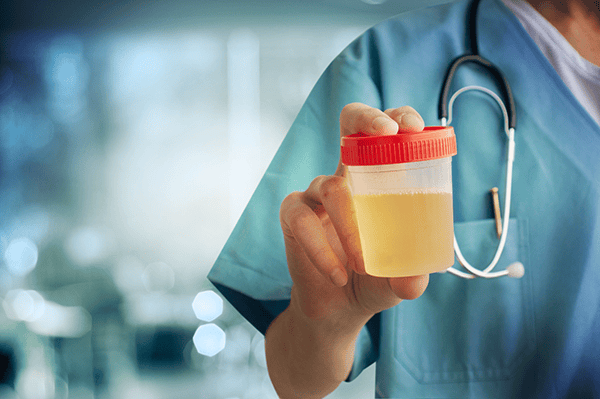
A confirmed positive result with a broken chain of custody is a result that can be challenged and potentially thrown out. Documentation isn’t optional; it’s the mechanism that makes your results legally and administratively defensible. Read our article, “How to Maintain Chain of Custody During Specimen Collections” to know what is required of collectors.
What a Complete Chain of Custody Looks Like
A complete chain-of-custody record documents every point of contact with the specimen from collection to lab receipt. The core elements are: who collected the specimen and when, the temperature reading taken within four minutes of collection, the security seals applied and their serial numbers, who transported the specimen, when the lab received it, and the condition of the seals at receipt.
Per 49 CFR Part 40 and SAMHSA Mandatory Guidelines, chain-of-custody forms must be completed at the point of collection, not reconstructed afterward. Recreating documentation after the fact is a compliance failure regardless of whether the underlying data is accurate.
Regulatory Standards That Govern These Requirements
The applicable framework depends on who is doing the testing and why. For federal workplace programs, the controlling standard is the HHS/SAMHSA Mandatory Guidelines for Federal Workplace Drug Testing Programs using Urine. For DOT-regulated employers, the governing rule is 49 CFR Part 40, which covers collection procedures, chain of custody, specimen validity, and MRO review. Clinical labs operating outside the federal workplace context typically fall under CLIA for laboratory operations, with CAP accreditation adding a quality layer. Court-ordered testing is governed by state statutes and evidentiary rules, which vary by jurisdiction. Know which framework applies to your program and build your documentation practices around it.
Common Documentation Gaps That Undermine Program Integrity
The most frequent chain-of-custody failures aren’t fraud; they’re carelessness. Missing temperature readings or checking the specimen for signs of adulteration or substitution are common, especially in high-volume collection environments where collectors are moving fast. Torn or broken seals or mismatched specimen ID numbers that aren’t flagged at receipt pass through without creating a record of the breach. Collector errors on the Custody and Control Form (CCF), incomplete or incorrect entries or correction mistakes, can cancel a test or give a donor’s attorney grounds to challenge the result. Build a collector training protocol that treats documentation with the same seriousness as the collection itself.
Build the Full System, Then Hold the Line
Effective urine sample tampering prevention isn’t one tactic; it’s a layered protocol where each control addresses a different failure point. Physical controls in the collection room, blue dye tablets, and specimen temperature checks, remove the opportunity to cheat. Specimen validity testing provides a chemical second look that catches what physical checks might miss. Tamper-evident packaging protects the sample in transit, and a complete chain of custody protects the result from the collection room to the lab report.
Many of these controls are low-cost and straightforward to implement. Where investment is needed, collector training, audited processes, consistent oversight, the cost of not doing it is higher. Programs that skip any single layer leave a gap, and motivated donors find gaps. A program that uses SVT but skips blue dye tablets is vulnerable to toilet-water substitution. A program with excellent collection controls but sloppy documentation is vulnerable to a canceled test or legal challenge on results that were otherwise clean.
Audit your current urine sample tampering prevention protocol against what you’ve read here. Identify the layers that are missing or inconsistently applied. Close those gaps before they’re exploited. AlcoPro has been equipping programs like yours since 1982. If you need testing supplies, specimen collector training, or both, reach out, same-day shipping is available on orders placed by 2:00 PM EST, and our team has the technical knowledge to back it up.