

The Hair Follicle Drug Test provides one of the most effective methods available for detecting long-term drug use. Unlike urine tests that typically identify recent drug exposure, a hair drug test can detect drug use for up to 90 days, making it an excellent choice for probation monitoring, substance abuse treatment programs, and court-ordered drug screening. Hair testing is widely recognized for its extended detection window and resistance to specimen tampering.
Drugs Detected by the 5 Panel Hair Drug Test
The standard 5-panel hair follicle drug test screens for:
- Marijuana (THC)
- Cocaine
- Opiates (Codeine, Morphine, Heroin)
- Amphetamines
- PCP
- Extended Opiates Panel Available
For more comprehensive drug screening, the extended opiates option also detects:
- Hydrocodone
- Hydromorphone
- Oxycodone
- Oxymorphone
Why Choose a Hair Drug Test?
- Detects drug use for up to 90 days
- Laboratory testing included
- GC/MS confirmation included
- Difficult to adulterate or tamper with
- Ideal for probation and court-ordered testing
- Supports substance abuse treatment monitoring
- Professional reporting included
- Collection process is quick and non-invasive
How Hair Drug Testing Works
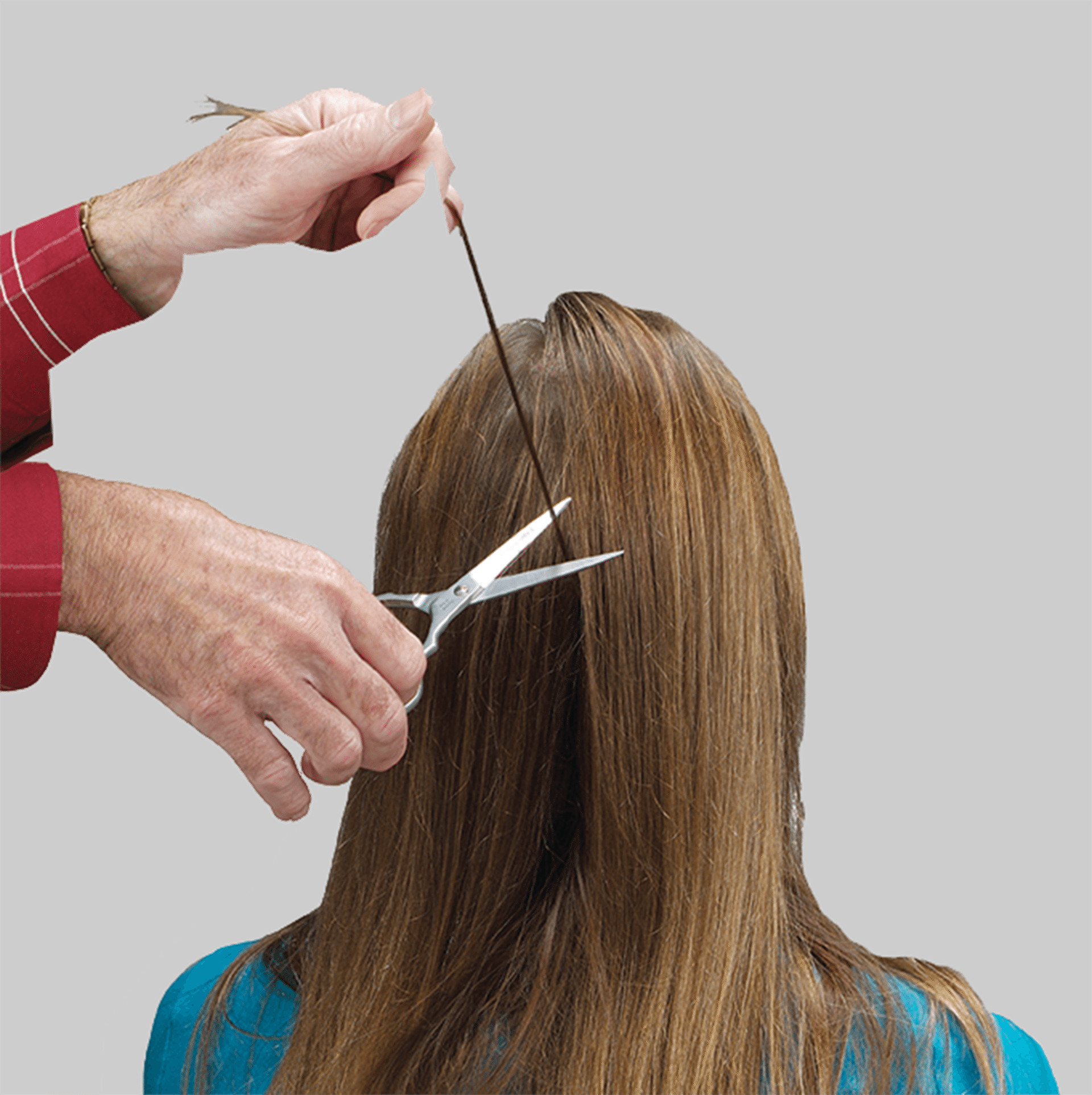
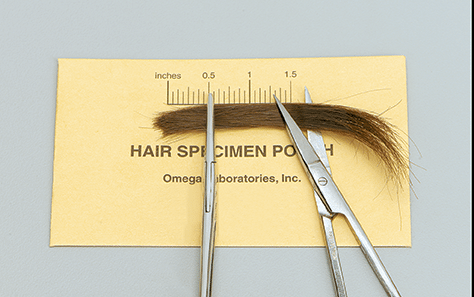
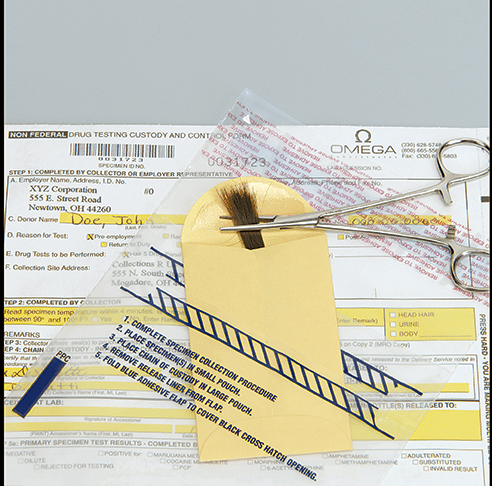
A certified collector cuts a small hair sample close to the scalp. The laboratory analyzes approximately 1.5 inches of hair growth, representing about three months of history. Because drugs become incorporated into the hair shaft as hair grows, hair testing provides a reliable record of historical drug use.
Best Uses for Hair Follicle Drug Testing
Hair drug testing is commonly used for:
- Probation monitoring
- Court-ordered testing
- Drug or family accountability courts
- Substance abuse treatment programs
- Non-regulated pre-employment or workplace testing (allowed only in certain states and municipalities)
- Forensic programs and investigations
90 Day Window of Detection
The 90-day detection window associated with a hair follicle drug test allows you to detect more drug users. When collecting a hair sample, the collector cuts a small swatch of hair close to the scalp. Only the 1 1/2″ of hair that grew closest to the scalp is sent to the lab for analysis. Because hair grows approximately a 1/2″ a month, the collected hair sample represents three months of growth. Because it takes only four to five days after drug use for hair to grow above the scalp, any drug use during the three months prior to the hair test will be detected with the hair test.
Eliminates Specimen Tampering and Adulteration
At this time there are no known adulterants for a hair follicle drug test. Since hair tests analyze the drugs inside the hair shaft, external contaminants and chemicals have no effect on the hair test. The non-intrusive collection procedure virtually eliminates test evasion, making hair testing far more effective than urinalysis in correctly identifying drug users. Two independent studies found that hair testing detected four to eight times as many drug users as did urine testing.
Laboratory GC/MS Confirmation Testing Process
The laboratory first performs a screening test using enzyme immunoassay methodology to detect the possible presence of drugs. Non-negative specimens are re-tested using GC/MS. To rule out the possibility of external contamination and to increase the level of certainty, GC/MS testing also looks for both the parent drug and/or the drug metabolites, as appropriate for the particular drug.

What others are saying
There are no contributions yet.