
Ensuring a safe, compliant, and hazard-free workplace is a top priority for safety-sensitive industries across the globe. Whether you are dealing with commercial motor carriers, aviation personnel, or public transit operators, the margin for error when it comes to on-the-job impairment is absolutely zero. At the center of this safety net is the Breath Alcohol Technician (BAT). Administering an alcohol test might seem like a straightforward procedure on the surface, but underneath lies a complex web of federal regulations, exact procedural steps, and strict equipment guidelines.
To maintain the integrity of these testing programs, comprehensive breath alcohol technician training is strictly enforced. Without highly trained technicians, companies risk compromised safety, legal liabilities, and heavily penalized compliance audits. This comprehensive guide explores the best practices, regulatory frameworks, and essential training protocols that govern professional breath alcohol testing.
The Foundation of Workplace Safety: Understanding the BAT Role
A Breath Alcohol Technician, or better known in the industry as a BAT, is much more than someone who simply tells an employee to blow into the instrument. They are of the many gatekeepers of workplace safety and the primary enforcers of federal testing protocols. Technicians are responsible for conducting tests, verifying donor identity, ensuring the testing environment is secure, and meticulously and accurately documenting the results.
Within a corporate structure, these technicians work closely with the company’s Designated Employer Representative, also referred to as the DER. Understanding workplace drug and alcohol program administrator roles is vital, as administrators rely entirely on the accuracy and compliance of the BAT. The DER manages the overarching policy, scheduling, and follow-up procedures, but if the BAT executes a flawed test, the DER is required to take additional necessary steps. Therefore, a rigorous technician training program is not just a regulatory hurdle; it is the fundamental building block of a legally defensible workplace safety program.
How to Become a Certified Breathalyzer Operator – BAT
For those looking to enter this vital profession, understanding how to become a breath alcohol technician is the first step. All BAT training should be structured to ensure that every technician possesses both the theoretical knowledge of federal rules and the practical skills to operate testing devices accurately. The BAT training pathway involves enrolling in a formalized breath alcohol technician training course. These programs are broken down into two distinct phases:
- Rules and Regulations: Often referred to as “procedural training”, this training phase takes a deep dive into the legal requirements and procedural steps.
- Device Proficiency: Often referred to as “proficiency training”, this training phase covers the breathalyzer’s basic functions and operations followed by 7 hands-on practicums (referred to as mocks), with the specific testing instrument the technician will use in the field.
Choosing the Right Training Format
When selecting a program, candidates often weigh the pros and cons of online versus in-person breathalyzer instructor courses.
- Online Courses: These offer incredible flexibility. The rules and regulations portion can be completed at the learner’s own pace, making it ideal for busy professionals. Many modern programs use webcams and secure portals to conduct live proficiency testing remotely.
- In-Person Courses: These provide immediate, hands-on feedback from an instructor. They are highly beneficial for those who have never handled testing equipment before and prefer direct supervision during their initial learning phase.
Regardless of the format chosen, the benefits of standardized breath alcohol technician certification are immense. Standardized certification ensures that a BAT in New York follows the exact same protocols as a BAT in California, creating a uniform, legally sound safety net across the entire country.
Navigating the Rulebook: 49 CFR Part 40 Compliance Requirements
If you operate within safety-sensitive transportation industries in the United States, you are bound by the Department of Transportation (DOT). The cornerstone of these regulations is Title 49 of the Code of Federal Regulations (CFR) Part 40. Understanding the 49 CFR Part 40 compliance requirements is non-negotiable for any BAT.
This extensive document dictates every aspect of the testing process. It outlines the DOT alcohol testing regulations, defining who must be tested, reasons why they must be tested (e.g., pre-employment, post-accident, random, reasonable suspicion), and exactly how the test must be administered.
Key Protocols Under Part 40 Regulations
To ensure maintaining federal alcohol testing compliance, technicians must adhere to strict Department of Transportation testing protocols. Some of the critical mandates include:
- Visual Privacy: The testing site must provide the employee with visual and aural privacy to prevent unauthorized individuals from seeing or hearing the test results.
- Securing the Site: The technician must ensure that no unauthorized personnel can access the testing site or gain access to the testing equipment.
- Identity Verification: The BAT must positively identify the employee using a valid, government-issued photo ID or employer representative verification before proceeding with the test.
Failure to follow these rules doesn’t just result in a slapped wrist; it can invalidate the test, allow an impaired employee to return to safety-sensitive duties, and result in severe fines for the employer. This is why DOT breath alcohol technician training focuses so heavily on rote memorization and practical application of Part 40.
The Importance of Practical Application: Mock Testing
Theory alone does not make a competent technician. Once a student grasps the DOT regulations, they must prove they can apply them in real-world scenarios. This is where the step-by-step proficiency demonstration for technicians comes into play.
Under DOT rules, a trainee must successfully complete required mock testing for BAT certification. This consists of seven consecutive, error-free mock tests that simulate various scenarios a BAT will ultimately face. These scenarios typically include:
- An uneventful, standard screening test that yields a negative result (less than 0.02).
- A screening test that yields a positive result (0.02 or higher), followed by a 15-minute wait period and a confirmation test.
- A scenario where the testing device fails to print the results, forcing the BAT to perform manual documentation.
- A scenario where the employee attempts to provide an inadequate amount of breath (a “shy lung” situation).
- A scenario dealing with an uncooperative or combative employee who refuses to sign Step 2 of the ATF or follow instructions.
These mock tests must be observed and graded in real-time by a qualified instructor. If the trainee makes a procedural error during the mock testing phase, they must restart the process. This rigorous standard guarantees that once certified, the technician can handle high-pressure situations with calm, procedural accuracy.
Mastering Evidential Breath Testing Device Operation
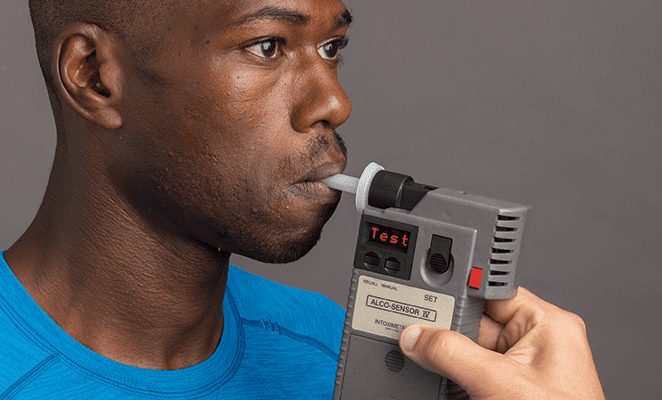
A technician is only as good as the tools they use. Therefore, mastering evidential breath testing device operation is a critical phase of training. An Evidential Breath Testing device (EBT) is a highly sophisticated piece of scientific equipment approved by the National Highway Traffic Safety Administration (NHTSA).
EBT Versus Saliva Alcohol Screening Devices
When evaluating testing methods, administrators and technicians must understand the differences between an EBT versus saliva alcohol screening devices (ASDs).
- Saliva ASDs: These are affordable and highly portable. However, under DOT regulations, they can only be used for the initial screening test. If a saliva test yields a result of 0.02 or higher, a confirmation test must be performed using an EBT.
- Evidential Breath Testers (EBTs): EBTs are approved for both the initial screening and the mandatory confirmation test. Because a confirmation test must print out a unique test number, the device’s serial number, and the precise alcohol concentration, only specific EBTs meet the criteria for confirmation.
For maximum efficiency and compliance, many professional testing facilities rely entirely on EBTs, bypassing saliva devices altogether to streamline the process.
Calibration: The Heartbeat of Device Accuracy
An EBT requires routine maintenance to remain legally viable. Evidential breath tester best practices and calibration procedures are strictly outlined by the device’s manufacturer in a Quality Assurance Plan (QAP).
Calibration checks (also referred to as an Accuracy Check), involve introducing a known concentration of ethanol gas (usually from a dry gas cylinder) into the EBT. If the device reads the gas accurately within an acceptable margin of error, it passes. If it fails, the device must be taken out of service and recalibrated by an authorized service center. BATs are responsible for ensuring these calibration logs are meticulously maintained. If a DOT inspector requests a calibration log and it is missing or out of date, every test conducted on that machine during the undocumented period can be legally contested and overturned.
Best Practices for Conducting Alcohol Tests
With training complete and equipment calibrated, the day-to-day role of the BAT begins. Conducting an airtight alcohol test requires unwavering focus. The goal of any testing procedure is avoiding fatal flaws in alcohol testing. A “fatal flaw” is a procedural error so severe that it immediately cancels the test, rendering it legally useless. Examples of fatal flaws include:
- Failing to conduct an air blank (a test to ensure the device is clear of residual alcohol) on an EBT before a confirmation test, or the air blank reading is greater than 0.00.
- The BAT fails to sign the Alcohol Testing Form (ATF) in the required section.
- The device fails to print the confirmation test result, and the BAT fails to note the result manually in the remarks section.
- The sequential test number or alcohol concentration displayed on the EBT does not match the printed result.
To avoid these flaws, BATs should adhere to the following best practice workflow:
- Preparation and Setup: Always prepare the testing area before the employee arrives. Ensure the EBT is fully powered, has paper in the printer, and you have a supply of individually sealed mouthpieces. Clear the room of any unauthorized personnel to ensure absolute privacy.
- Employee Intake: Greet the donor professionally. Request photo identification. Explain the testing process clearly and concisely. Ask the donor to empty their mouth (remove gum, mints, or chewing tobacco), as some foreign objects may hold residual mouth alcohol and skew the test.
- The Initial Screening Test: Follow the prompts on the instrument and remember to show the employee the test number appearing on the device. Allow the employee to select a sealed mouthpiece and open it in full view of the employee. Attach it to the EBT and instruct the employee to take a deep breath and blow long and steady into the mouthpiece until instructed to stop.
- If the result is less than 0.02: The test is negative. Print the result, affix it to the ATF with tamper-evident tape, sign the form, provide the employee with their copy, and dismiss them from the testing site.
- The 15-Minute Wait Period (If Screening is 0.02 or higher): If the screening result is 0.02 or greater, you must conduct a confirmation test. However, you must first enforce a mandatory 15-minute wait period. This wait period is crucial. It ensures that any “mouth alcohol” (alcohol from mouthwash) dissipates. The BAT must observe the employee during this entire 15-minute window. The employee must not eat, drink, smoke, or belch. If they do, the 15-minute clock does not restart, but the BAT must note the behavior in the remarks section of the ATF.
- The Confirmation Test: Before conducting the confirmation test, the BAT must perform an “air blank” to prove the device is reading 0.00 and is not contaminated. Have the employee select a new sealed mouthpiece and instruct them to blow into the device just as they did before. The result of this confirmation test is the final result. For example, if the screening test was 0.04 but the confirmation test is 0.01, the final result is 0.01 (Negative).
- Flawless Documentation: Print the confirmation result. Ensure the test number matches the test number shown to the employee. Use tamper-evident tape to attach the printout to the ATF. Have the employee sign the document, and then the BAT signs the document and immediately distribute the copies to the employee and employer representative.
Staying Current: The Recertification Timeline for Alcohol Testing Personnel
Regulatory environments and technology are never static; they evolve. Because of this, a BAT’s education does not end once they receive their initial certificate. To ensure ongoing proficiency, the DOT dictates a strict recertification timeline for alcohol testing personnel.
Currently, federal guidelines require a certified Breath Alcohol Technician to complete refresher training every five years. This recertification course covers any updates or changes to 49 CFR Part 40 and requires the technician to once again complete the seven consecutive, error-free mock tests. However, five years is the maximum timeline.
There are scenarios where a BAT must undergo retraining much sooner. This is known as “Error Correction Training.” If a BAT makes a fatal flaw during a live test that causes a test to be canceled, they must undergo immediate error correction training within 30 days of being notified of the mistake. This training focuses specifically on the area where the error occurred and requires three error-free mock tests related to the specific mistake. During those 30 days, or until the training is complete, the technician is strictly prohibited from conducting any DOT alcohol tests.
Conclusion
Precision, consistency, and a deep understanding of federal regulations are the hallmarks of a professional Breath Alcohol Technician. From mastering evidential breath testing device operation to navigating the strict requirements of 49 CFR Part 40, the role requires meticulous attention to detail.
By investing in high-quality Breath Alcohol Technician training and adhering strictly to best practices, technicians protect not only their employers from liability but also the general public from the devastating consequences of workplace impairment. Whether you are conducting a routine random screen or managing a complex post-accident confirmation test, remember that avoiding fatal flaws and documenting every step with precision is your ultimate duty. Through continued education and unwavering procedural integrity, BATs remain the most critical asset in the ongoing mission to maintain safe, drug- and alcohol-free workplaces.